24.08.2025
How to Reduce Customer Acquisition Cost (CAC) with a Referral Program

Customer acquisition cost (CAC) – the cost of converting a prospect into a paying customer – is a critical metric for any business. For small business owners and SaaS companies, a high CAC can eat into profits and stifle growth. The good news is that implementing a customer referral program can dramatically reduce CAC by turning your satisfied customers into an effective, low-cost marketing force. In this article, we’ll explore how referral marketing helps lower customer acquisition costs (with data and real examples) and share tips – including a look at Afivio – for launching your own referral program.
Why High CAC Is a Problem (and How Referrals Help)
CAC represents the total marketing and sales expenses required to acquire a new customer. If you spend $10,000 on marketing in a month and gain 50 customers, your average CAC is $200 per customer. Keeping CAC low is vital – if it costs too much to win a customer, profitability suffers. Unfortunately, traditional channels like online ads have become expensive, with rising costs per click and impression. Many businesses see diminishing returns from paid ads as acquisition costs climb.
Referral programs offer a solution. A referral program is a strategy that incentivizes your existing customers to refer new customers to you (often by offering rewards to the referrer, the new customer, or both). Referrals leverage the most powerful marketing asset you have: happy customers who recommend your business to people they know. This form of word-of-mouth marketing can acquire new customers at a fraction of the cost of conventional advertising, significantly lowering your CAC.
How Referral Programs Lower Customer Acquisition Cost
Why are referrals so effective at cutting acquisition costs? Here are the key reasons:
Pay for Results, Not Promises
With referral marketing, you typically reward customers only after a successful referral (e.g. their friend makes a purchase). This means your marketing spend directly generates a new customer. Unlike paid ads – where you pay upfront for clicks or impressions that may not convert – referral costs are incurred only when you gain a customer. The result is a much lower cost per acquisition. Studies show that customers acquired via referrals can have a CAC significantly lower than those gained via ads (one analysis found referred customers’ acquisition cost was about $23 lower than usual).
Higher Conversion Rates Thanks to Trust
People trust recommendations from friends and peers far more than they trust advertising. Over 90% of consumers say they trust referrals from people they know, compared to well under half who trust traditional ads. This built-in trust means referred leads are highly qualified – they come in ready to sign up. In fact, referral marketing can produce conversion rates 3 to 5 times higher than other channels. By the time a referred prospect reaches you, they often already believe in your product (because someone they trust vouched for it), so you spend less effort and money converting them. This boosts marketing efficiency and drives down your effective CAC.
Better Customer Loyalty and Lifetime Value
Customers gained through referrals tend to be more loyal and valuable in the long run. Since they arrive with a positive impression via a friend’s recommendation, they often stick around and engage more. Research backs this up: referred customers have about a 16% higher lifetime value on average, and their retention rate is higher as well (one study found referred customers were 18% more likely to stay with the company than non-referred customers). They also tend to spend more – one analysis found customers acquired by referrals spend roughly 200% more than the average customer. Higher retention and spending mean you get more revenue per customer, which effectively lowers the CAC relative to the value they bring. In short, referral customers aren’t just cheaper to acquire – they often return the favor by being great customers.
Viral Growth Potential (More Bang for Your Buck)
A happy customer who refers one friend is great – but many will refer multiple friends, and those new customers might go on to refer even more people. This creates a viral loop that can dramatically scale your customer base without proportional marketing spend. Word-of-mouth is incredibly potent; according to McKinsey, it influences 20–50% of all purchasing decisions and can generate far more sales than equivalent exposure via paid ads. Companies that crack the code on referrals enjoy a self-perpetuating acquisition engine. This kind of organic growth lowers your overall CAC as your customer network keeps spreading the word for free.
Examples of Referral Programs That Slashed CAC
Many successful companies have proven that referral programs can drive explosive growth while keeping CAC low. Let’s look at a few famous examples:
Dropbox – Massive User Growth on a Shoestring Budget
When Dropbox, a file hosting SaaS, tried traditional advertising, they found it cost them up to $300 to acquire a customer for a product priced at only $99/year – clearly unsustainable. They pivoted to a referral program offering free extra storage space to both the referrer and the friend. The program went viral. Dropbox’s user base soared from 100,000 to 4,000,000 in just 15 months – an astonishing 3900% growth. At its peak, referrals accounted for 35% of daily sign-ups. By leveraging existing users to spread the word (at minimal cost, since cloud storage was cheap to provide), the company dramatically lowered its CAC and avoided spending a fortune on ads. This referral-driven growth is often cited as a key to Dropbox’s success.
PayPal – Rapid Expansion Through Cash Rewards
Online payments company PayPal also harnessed referrals to fuel its early growth. PayPal offered cash bonuses for referrals – for example, giving $10 to both the referrer and the new user when someone signed up through a referral link and made a qualifying transaction. This approach meant paying out rewards, but it turned out to be more cost-effective than trying to acquire users via advertising. A Wharton School case study noted that PayPal’s famous referral program was bringing in 7–10% daily growth in new customers and helped lower its overall customer acquisition cost by around 10%. In essence, PayPal only spent money when a new active user joined (as a referral bonus), making the cost per acquisition very efficient. Those new customers, in turn, often referred others, creating a viral loop. PayPal’s referral strategy is credited with helping it achieve massive user adoption without enormous ad spend.
Tesla – Selling Cars by Word of Mouth
Electric car maker Tesla showed that referral marketing isn’t just for software or small purchases – it can even help sell high-ticket products. Tesla’s referral program incentivized existing owners to refer new buyers by offering perks like free Supercharger credits or chances to win exclusive prizes. The results were impressive: at one point roughly 30% of Tesla’s new Model S/X sales were coming via referrals (as of Q2 2019). That means nearly one-third of Tesla’s cars sold were acquired with virtually no advertising spend, thanks to enthusiastic owners sharing their passion with friends. Traditional automakers often spend a fortune on marketing per vehicle sold, but Tesla managed to significantly cut that cost by leaning on customer referrals. This example shows how even in industries with typically high CAC, a well-run referral program can make a big dent in marketing expenses.
Airbnb – Referral Credits Boosting Bookings
Global home-sharing platform Airbnb implemented a referral program that offered travel credit (e.g. $25) to both referrers and referred friends when someone new joined and completed a booking. This strategy leveraged Airbnb’s satisfied user base – happy travelers and hosts inviting their networks. The impact was substantial: referrals increased bookings by over 25% in some markets, contributing significantly to Airbnb’s growth at relatively low cost. Instead of heavy advertising, Airbnb let its users do the talking and rewarded them with credits (which also encouraged those new users to book a trip). By boosting conversions through friend-to-friend recommendations, Airbnb effectively lowered its CAC while accelerating its global expansion.
Tips to Launch a Referral Program (and Lower Your CAC)
Plan Your Program: Define your goal and design the incentive structure. Choose a reward that will excite your customers and is sustainable for you – whether it’s a discount, account credit, free upgrade, or cash.
Make Referrals Easy: Keep the process simple and user-friendly. Give each customer a unique referral link they can share easily. Provide clear instructions on how the referral works and what both parties get. The less friction (fewer forms, steps, or fine print), the more people will actually refer friends.
Promote the Program: Don’t keep your referral program a secret. Announce it to your customers via email, on your website or app, and on social media. Highlight the benefits – let customers know they can save money or earn rewards by bringing in friends. A well-promoted program ensures you get enough participation to meaningfully lower CAC.
Track and Optimize: Use a system to track referrals and their outcomes (who referred whom, which referrals converted, etc.). By monitoring results, you can calculate how much your CAC is improving and refine the program if needed. Data will help you maximize the program’s effectiveness. Many businesses leverage referral software tools (more on this below) to automate tracking and make adjustments easier.
Afivio – A Tool to Streamline Your Referral Program
Afivio is one such platform that enables businesses to create and run referral or affiliate campaigns with minimal hassle. It’s designed to automate the process so you can start gaining new customers via referrals without getting bogged down in technical details.
It provides an all-in-one dashboard to configure your referral campaign, generate shareable links, and monitor results in real time. Afivio automatically tracks referrals and issues rewards when a referral converts, saving you time and ensuring accuracy.
Afivio even has a free trial plan (14 days). As your program grows, Afivio offers scalable plans to support larger campaigns, but you can begin without any heavy upfront investment.
By using this tool, you can quickly implement the best practices we discussed: it simplifies sharing referral links, keeps the program easy for customers, and gives you analytics to track and optimize your CAC reduction. In short, Afivio removes the technical hurdles so you can focus on encouraging your customers and reaping the rewards of a low-CAC referral strategy.
How It Work?
With Afivio, you can build, run, and scale your referral campaigns in just a few steps:
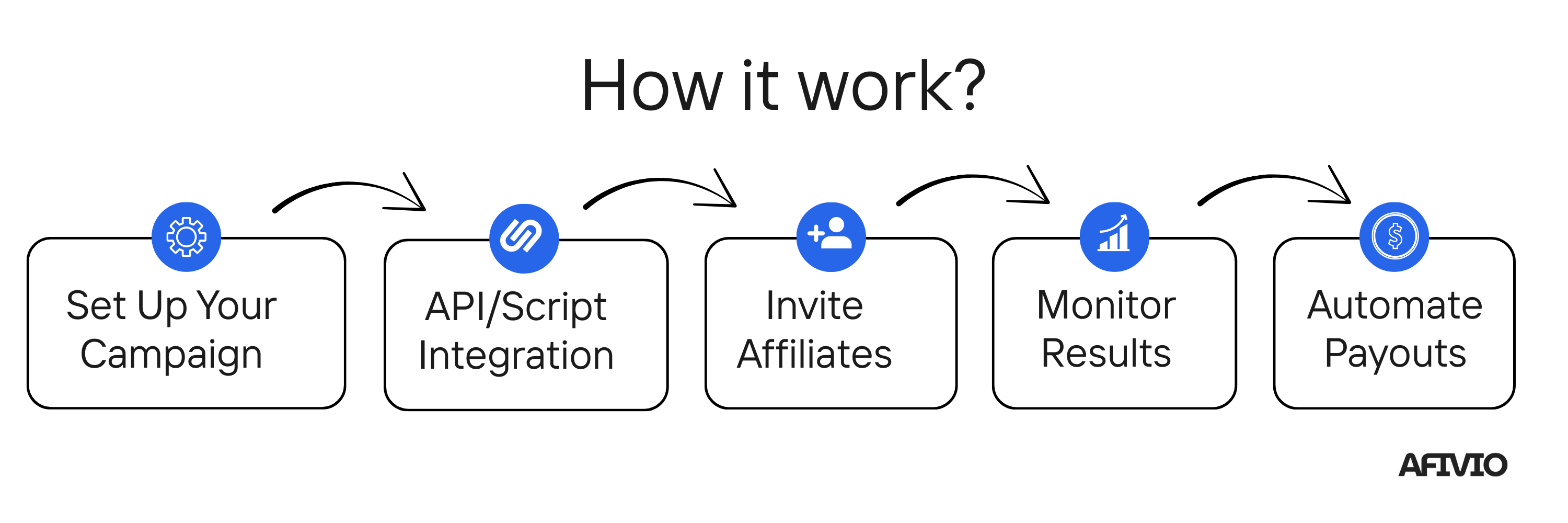
From campaign setup to automated payouts, everything is streamlined in one platform.
Conclusion: Lower CAC and Higher Growth through Referrals
Traditional marketing keeps getting pricier, but referral programs offer a way to acquire customers at a fraction of the cost. By leveraging your customers’ trust and enthusiasm, you can dramatically lower CAC – and as a bonus, referred customers often turn out to be especially loyal.
For a small business or SaaS company, a referral program can deliver one of the highest ROIs in marketing. Instead of pouring money into ads, you reward your customers for sharing – creating a virtuous cycle of happy customers bringing in more customers.
Even a business with a modest marketing budget can grow faster while spending less by implementing a referral program. Start small, optimize, and watch your CAC drop as referrals roll in.