24.08.2025
How to Build Your First Referral Program

Introduction
A referral program is a structured marketing strategy that encourages existing customers to recommend your business to friends and colleagues. Typically, businesses offer rewards (discounts, cash-back, free products, etc.) to both the referrer and/or the referred customer. Such programs capitalize on word-of-mouth – one of the most trusted sources of information for new customers. In fact, 89% of consumers say they trust recommendations from people they know. For small businesses and e-commerce brands, referrals drive growth by lowering customer acquisition costs (CAC) and improving retention.
1. Prepare Your Strategy (Checklist)
- Step 1: Define Clear Goals. Decide what you want to achieve (e.g., more sign-ups, increased sales, higher retention). A clear goal guides your program design and success metrics. For example, you might aim for a 10% boost in new customers or a certain number of referrals per month.
- Step 2: Research Your Target Audience Thoroughly. Understand your customers’ profiles and motivations. Identify what they value in your products and what rewards would motivate them. Conduct surveys or analyze customer data to learn who your best advocates are and what incentives would appeal to them.
- Step 3: Create Clear Incentives. Design attractive rewards to motivate referrals. Choose incentives that are easy to understand and compelling – such as discounts, cash rewards or free gifts – and that your customers truly value. The reward must be proportional to the effort: a small effort may warrant a modest reward, while a higher-effort referral (like signing up a friend for a paid plan) may require a larger incentive.
- Step 4: Offer Reward Options. Give customers choices when possible. For instance, allow the referrer to pick between a percentage discount, a cash-back, or a free gift. Offering multiple reward options can appeal to different preferences and boost participation.
- Step 5: Understand the Psychology of Invitations and Rewards. Leverage social trust. People prefer to receive recommendations from friends or family. A good referral program taps into that social capital by making referrers feel like they are helping their friends. Ensure the offer feels fair: experiments show that framing the reward as benefiting both parties (e.g. “you and your friend each get 10% off”) can improve results.
- Step 6: Eliminate Barriers to Participation. Make it as easy as possible to refer. Provide a single-click referral link or embed share buttons on social media, email, and messaging apps. Simplify the process: avoid long forms or complicated signup steps. A user-friendly experience encourages more customers to join the program.
- Step 7: Promote It. Drive awareness by advertising the program frequently. Use multiple channels: send targeted email campaigns and newsletters featuring the referral offer, post on your social media accounts, add banners or pop-ups on your website, and mention it in post-purchase messages. The more customers hear about the program, the more they will participate.
- Step 8: Track Its Success. Set up tracking from day one. Use analytics to monitor how many customers join the program, how many share their referral links, and how many referred friends actually convert to buyers. Identifying these metrics early will help you spot issues (e.g., lots of sign-ups but few conversions) and adjust your strategy.
- Step 9: Keep It Relevant Over Time. Refresh and optimize regularly. Update or rotate rewards to keep customers interested, and re-engage dormant participants with reminders. Review performance data and refine program elements. For example, thank your top referrers publicly, and ensure the incentives remain competitive. Continuously adapting will maintain momentum and prevent the program from stagnating.
2. Choose the Type of Referral Program
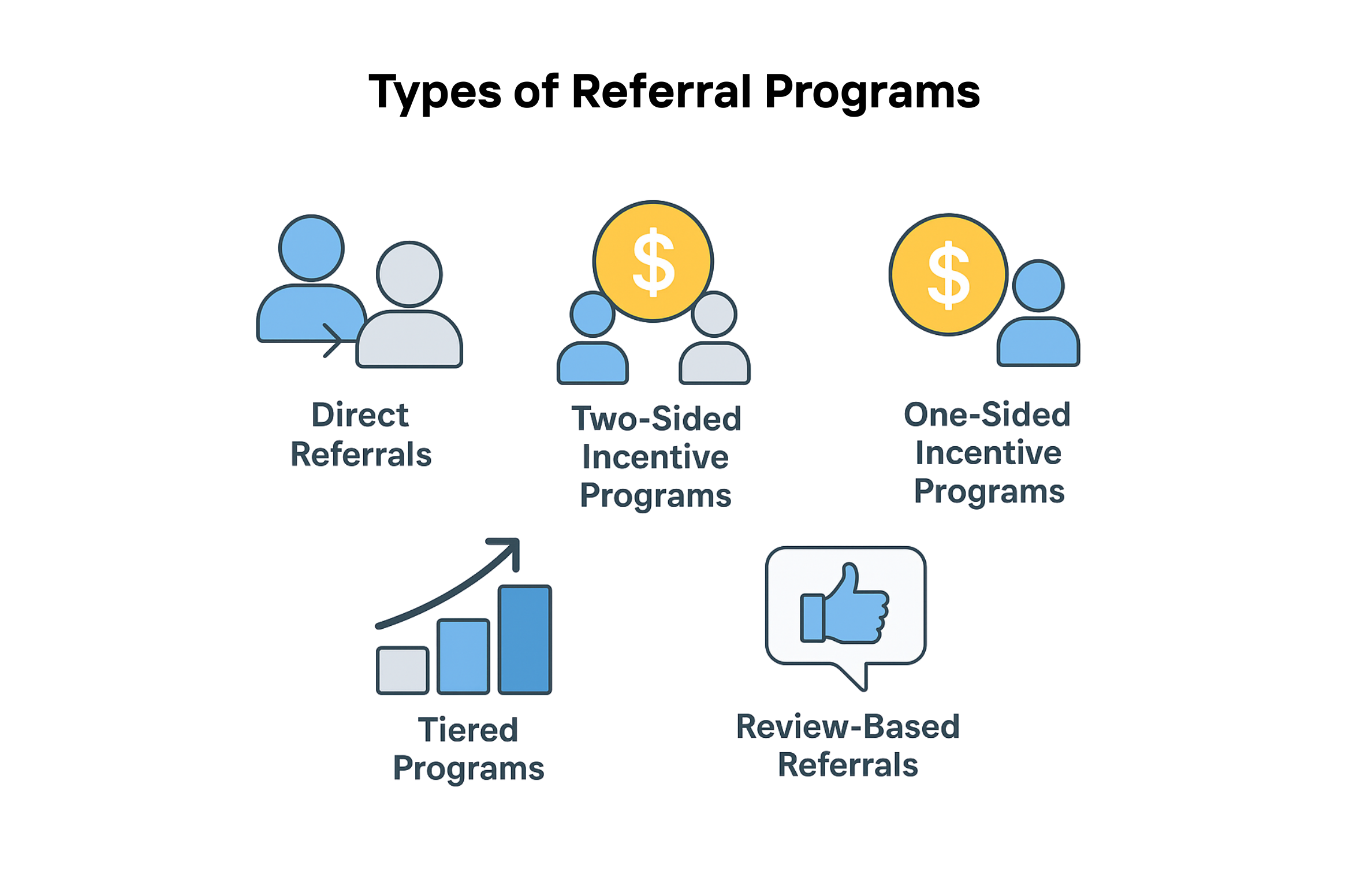
Decide on the program format and rules. A common choice is whether to run a one-sided or two-sided referral program.
- Two-Sided Incentive Programs: Reward both parties. In this model, the referrer and the referred customer each receive a benefit (e.g. “Give $10, Get $10”). This approach removes hesitation by motivating everyone involved. Many e-commerce stores start with a two-sided structure as it balances simplicity with high engagement.
- One-Sided Incentive Programs: Only one party is rewarded – either the referrer or the new customer. For example, you might give store credit only to the referring customer, or only to the referred friend. One-sided programs can be useful if margins are tight, but they generally see less participation than two-sided ones. They are sometimes used by premium brands that avoid discounting new customers but still want to reward advocates.
- Other Variations: You may also consider tiered programs (increasing rewards for multiple referrals) or review-based programs (reward customers for referrals that come via a public review). Tiered rewards encourage top advocates to keep referring. Choose the structure that fits your budget and goals.
Next, define eligibility and reward conditions clearly. Specify who can participate (e.g. all existing customers, loyalty members, or subscribers) and who qualifies as a new customer (e.g. first-time buyer only). Detail what counts as a successful referral – for instance, the referred friend must make a purchase above a certain amount or complete a registration. Set any limits (e.g. one reward per referring customer per friend).
Be transparent with terms and conditions. Clearly state all rules in your program’s T&C document or FAQ. For example: “Rewards are earned only on first-time purchases,” or “Referral rewards will be delivered after the referred friend’s order is confirmed.” Clear terms prevent confusion. Also ensure legal compliance: check regulations on referral incentives (such as disclosures and privacy laws) so your program doesn’t violate any laws. Transparency and compliance build trust.
3. Choose the Right Platform
Selecting a referral software or platform is crucial for easy management. Rather than tracking referrals manually, use a tool that can automate sign-ups, generate unique referral links or codes, and distribute rewards. A good platform will integrate with your e-commerce store or email system. With the right digital tools, managing and tracking your referral program becomes easy. Modern referral platforms handle much of the heavy lifting: they embed shareable links or widgets on your site, trigger automated emails to referees, and manage reward fulfillment.
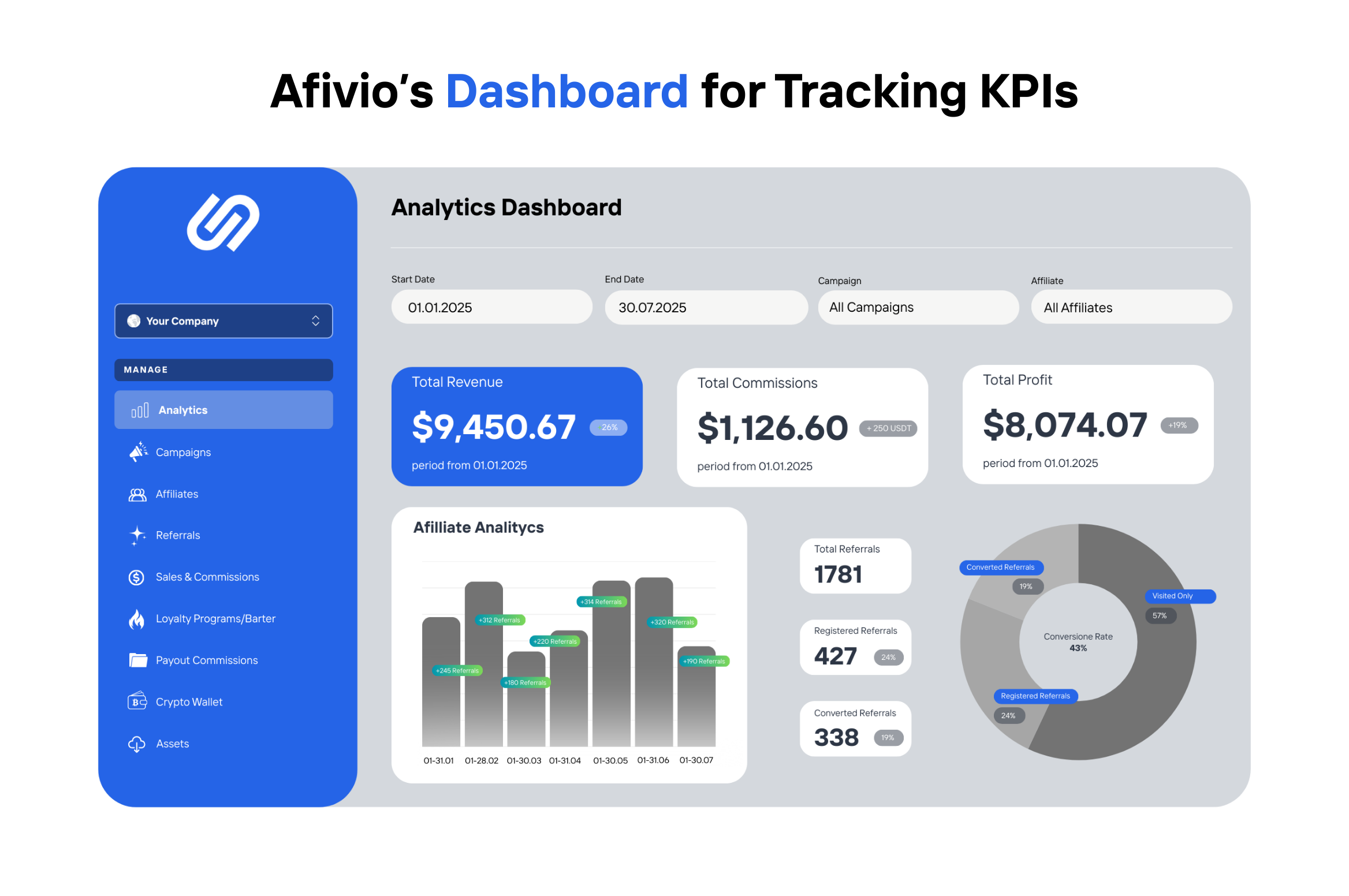
For example, Afivio is an all-in-one referral and affiliate marketing platform built for small businesses and e-commerce brands. It provides a seamless system to create and monitor referral campaigns. Its real-time analytics dashboards show how many referrals are coming in and which channels drive the most conversions. By using a dedicated solution like Afivio, you save time on implementation and reduce errors in tracking, allowing you to focus on growing your referral-driven revenue.
4. Implement Your Program
Now integrate the referral program into your customer experience. First, add referral signup options on your website or app. This might be a dedicated “Refer a Friend” page, a banner, or a section in your user account dashboard where customers can access their unique referral link. Ensure that the referral invitation and sharing tools are prominent at logical touchpoints (for example, after a purchase confirmation or on the thank-you page).
Next, embed referral prompts in your email flows. Send an automated email after a purchase or sign-up that includes the referral offer and the user’s link or code. Include gentle reminders in regular newsletters or re-engagement campaigns, highlighting the program’s benefits and how to participate.
Focus on a seamless user experience. Test the flow yourself: verify that referral links work correctly, landing pages load fast, and reward codes apply without issues. The process should require minimal effort from the customer. For example, one-click “Share” buttons and pre-written messages (for email or social) make it easy for customers to spread the word. Ensure everything is mobile-friendly since many customers share links from their phones.
If you have staff (customer support or sales teams), brief them on the program. They should understand how it works so they can answer customer questions and even promote the program in conversations. Training your team ensures consistent messaging and can help resolve any participant issues quickly.
5. Promote Your Referral Program
Having a great program is pointless if nobody knows about it. Use an omnichannel approach to promotion:
- Email Campaigns: Send a dedicated launch email to your customer base announcing the referral program and its rewards. Include clear calls-to-action (CTAs) and explain how easy it is. Then feature the program in regular communications (e.g. monthly newsletters or post-purchase emails) to keep it top-of-mind.
- Website and App: Add banners, pop-ups, or notification bars on your site advertising the referral offer. Consider a pinned post or story on your social media profiles with the program link. If you have a mobile app, include a referral prompt in key screens (such as the profile or home screen).
- Social Media: Regularly create posts about the referral program. Use graphics or short videos explaining the rewards. Encourage customers to share testimonials or success stories of using the referral discounts. If possible, invest in a small ad budget to boost these posts to your followers or lookalike audiences.
- Influencer Partnerships: Collaborate with influencers or brand ambassadors who align with your brand. Provide them with a special referral code to share. Their endorsement can tap into new networks and lend credibility to your program.
- Physical Packaging and Points-of-Sale: If you ship products, include a printed insert or a sticker in the package that explains the referral offer. For in-store retail, display signs at the counter or on receipts with referral details. Offline prompts can be very effective – for example, some small businesses attach referral cards to product packaging.
- Customer Support & Events: Train your team to mention the program when talking with happy customers (e.g. “You seem to love our service – did you know you can get a reward by referring a friend?”). At live events or webinars, include a slide or brief mention about the referral program.
In all promotions, emphasize how easy and rewarding the program is. Highlight the incentive clearly (e.g., “Give 10%, Get 10% Off!”) and include a link to a landing page with full details. Spread the word through every available channel – email, social media, your website, and in-person touchpoints – to ensure maximum visibility.
6. Track, Analyze, and Optimize
Monitor key metrics. Use your referral platform’s analytics (e.g. Afivio’s dashboard) to keep a close eye on performance. Important metrics include:
- Referral Rate (Share Rate): The percentage of customers who actually send out referrals. A low share rate might indicate you need to simplify the process or boost incentives.
- Conversion Rate: The percentage of referred friends who become customers. This is crucial – if your conversion rate is low, you may need to adjust your reward or landing page. Conversion rate is arguably one of the most critical metrics since it indicates how effective each referral is.
- Customer Lifetime Value (LTV): Track the long-term value of customers acquired via referrals versus other channels. Referred customers often have higher loyalty – studies show they can have roughly 16% higher lifetime value than non-referred customers. Higher LTV from referrals means your program is attracting quality leads.
- Customer Acquisition Cost (CAC) for Referrals: Compare what you pay out in rewards against the revenue from new customers. Referral programs typically have lower CAC because you leverage existing customers’ networks.
- Other KPIs: Monitor total referral-generated revenue, number of active referrers, and usage of different promotional channels.
Regular analysis lets you spot trends. For example, if you see many shares but few conversions, the landing page or offer might need tweaking. If a particular incentive outperforms others, you can promote it more prominently. Use A/B testing: try different messages or rewards on a subset of customers to see what drives the best results.
Use Afivio’s analytics. Afivio provides built-in reporting on these metrics. You can filter by campaign or time period, see real-time referral activity, and identify your top referrers. Leverage these insights to optimize your program. For instance, Afivio might show you which products generate the most referrals or which social channel drives clicks. Acting on this data – such as by adjusting email frequency or increasing rewards during slow periods – will steadily improve the ROI of your referral program.
Conclusion
A well-designed referral program can become one of your most cost-effective growth strategies. By carefully planning your strategy, defining the program structure, and using the right tools, even small businesses can harness word-of-mouth to expand their customer base. The key steps are clear: set measurable goals, understand your audience, craft attractive incentives, remove friction, and promote widely. Then continuously track the results and iterate.
Remember, successful referral programs rely on the trust and satisfaction of your existing customers. Rewarding them for spreading the word not only brings in new buyers but also strengthens their loyalty.
With platforms like Afivio, launching a referral program is simpler than ever. These tools automate the technical details so you can focus on marketing and relationship-building. In summary: a well-run referral program creates a win-win-win scenario – the referrer is rewarded, their friend gets a great deal, and your business gains a loyal new customer. Use the guidance above to launch your first referral program, and watch how satisfied customers become your best advocates.