30.09.2025
From Partners to Sales: How Affiliate Marketing Works

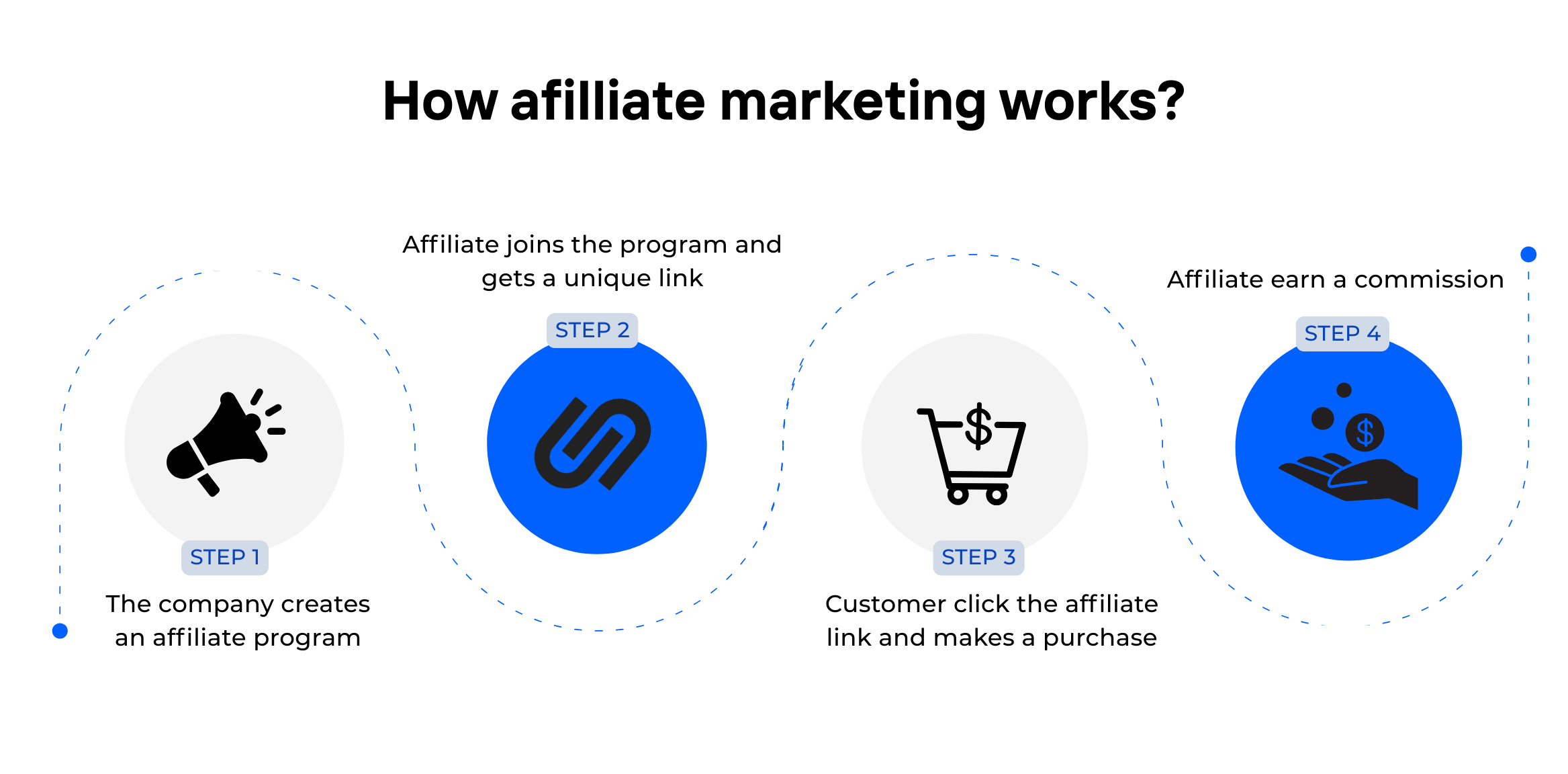
Affiliate marketing is a performance-based strategy where businesses (“advertisers”) reward outside partners (“affiliates”) for driving customers through their unique referral links. When someone clicks an affiliate’s link and makes a purchase (or completes a desired action), the affiliate earns a commission. This model is win-win: brands only pay for actual results (sales or leads), while affiliates earn passive income by promoting products they trust. In fact, Shopify notes affiliate marketing is now “a cornerstone of online business strategy,” with brands reaching new audiences and creators finding a stable way to monetize content.
Affiliate programs involve several key players. Advertisers (the brands or businesses) sell products or services and recruit partners to promote them. Affiliates (also called publishers or partners) are bloggers, influencers, or websites that market the advertiser’s offers to their audience. Customers are the end-users who click affiliate links and make purchases.
Common Niches That Excel with Affiliate Marketing
- E-commerce: Online retailers use affiliates extensively. Affiliates promote products on blogs or social media, and when a visitor buys through their link, the affiliate earns a commission.
- SaaS & Software: Software-as-a-Service companies (CRMs, email tools, hosting platforms) often offer recurring commissions on subscriptions. These high-ticket products let affiliates earn steady, recurring income.
- Financial Services: Banks, investment platforms, and insurance companies frequently run affiliate programs. They may pay generous CPA or CPL commissions for new account sign-ups or leads.
How Affiliate Marketing Works Step by Step
Step 1: Set Up Your Affiliate Program
For businesses, the first step is to design a clear strategy for your affiliate program. Before inviting partners, define the goals (e.g. boost sales, generate leads, increase subscriptions), set attractive yet sustainable commission rates, and decide on payment models such as CPA, CPL, or revenue share. Next, establish the program’s terms and conditions—cookie duration, payout schedule, and rules on promotional channels—to ensure transparency from the start.
It’s also crucial to customize your affiliate portal: provide branded dashboards, easy sign-up forms, and ready-to-use marketing assets (like banners, product feeds, and referral links). This makes joining your program simple and appealing for affiliates. Platforms like Afivio allow businesses to configure all these elements in one place, so you can launch a professional program without coding, automate tracking, and start recruiting partners faster.
Step 2: Recruit and Support Affiliate Promotion
Once your program is set up, the next step is to find and onboard affiliates who can effectively promote your brand. Start by identifying the channels most relevant to your business: bloggers, content creators, influencers, comparison sites, coupon platforms, or niche communities. Use affiliate networks, outreach campaigns, and even your existing customer base to recruit motivated partners.
But recruitment alone isn’t enough. To maximize results, provide affiliates with ready-to-use promotional materials such as banners, product images, social media creatives, email templates, and sample content. Clear brand guidelines will help maintain consistency across different channels.
Ongoing communication and support are essential: keep affiliates informed about new products, seasonal offers, and campaign updates. Consider running incentive programs (like performance bonuses or tiered commissions) to motivate them to promote more actively.
With SaaS solutions like Afivio, businesses can centralize promotion assets inside the affiliate portal, making it easy for partners to access marketing tools, track performance, and stay engaged with your brand.
Step 3: Tracking & Analytics
After launching your program and onboarding affiliates, the next priority is to ensure accurate tracking of all referral activities. Every click, lead, or sale generated by your partners should be properly attributed, so you can measure performance and pay commissions fairly.
Set up unique referral links or codes for each affiliate. These links drop cookies or use other identifiers to track customer actions across devices. A reliable tracking system prevents disputes and gives both you and your affiliates full transparency.
Equally important is analytics. By monitoring KPIs such as clicks, conversion rate, average order value, and ROI, you’ll see which affiliates deliver the most value and which campaigns need optimization. Detailed reporting helps you refine commissions, reallocate budget, and scale the program strategically.
With SaaS tools like Afivio, businesses get built-in real-time tracking and customizable reports. You can follow each affiliate’s performance, automate commission calculations, and ensure that no referral goes unnoticed—all in one intuitive dashboard.
Step 4: Conversion & Sales
Once your tracking is in place, it’s time to focus on what drives value — conversions. A conversion happens when a customer referred by an affiliate completes the desired action, such as making a purchase, signing up for a subscription, or filling out a lead form.
As a business, you should clearly define what counts as a conversion and align this with your commission model:
- CPA (Cost Per Action): Pay affiliates only when a sale occurs.
- CPL (Cost Per Lead): Reward affiliates for qualified leads or sign-ups.
- Revenue Share: Offer affiliates a percentage of sales or recurring subscription fees.
By setting clear rules, you ensure fairness and keep affiliates motivated.
Step 5: Payouts to Affiliates
Smooth and transparent payments are critical to maintaining trust with your partners. Define your payout frequency (monthly, bi-weekly, or threshold-based) and stick to it. Make sure affiliates know the minimum payout amount and available payment methods (PayPal, bank transfer, etc.).
On-time payouts not only strengthen relationships but also encourage affiliates to stay loyal and promote your brand more actively. To go further, you can introduce performance bonuses or tiered commissions for top performers.
Using affiliate software like Afivio, businesses can automate the entire payout process. The platform calculates commissions, tracks pending vs. approved conversions, and distributes payments seamlessly across multiple currencies — reducing admin work and ensuring affiliates always get paid on time.
Benefits of Affiliate Marketing
Affiliate marketing offers clear advantages for both sides. For businesses, it provides cost-effective growth: you pay only for actual conversions, reducing wasted ad spend. By partnering with affiliates, you tap into new, targeted audiences (blogs, niche sites, influencer followers) at scale – often reaching customers you might not otherwise find. Start-up and maintenance costs are low, since affiliates invest their own time and resources to promote your products. The result is lower risk and high ROI.
For affiliates (partners), the benefits are freedom and passive income. You can work from anywhere, on your own schedule, promoting products you care about. Once content is published, it can continue earning (“passive” income) whenever new visitors convert. This flexibility – plus the ability to diversify by promoting different products or industries – makes affiliate marketing attractive as a side hustle or full-time business. And if you’re a creator looking for new opportunities to earn by promoting different brands, explore available programs by registering as a creator on our platform.
Conclusion
Affiliate marketing is a win-win for brands and partners. Advertisers gain scalable, performance-driven sales growth, while affiliates earn commissions with minimal upfront investment. Affiliates (creators) and advertisers each benefit – affiliates monetize their influence, and brands reach eager audiences. To harness this power, many businesses use dedicated affiliate software that simplifies management.
Ready to turn partnerships into sales? Explore Afivio’s affiliate solutions and start turning those collaborations into real revenue today.