02.01.2026
10 Key Elements of a Successful Referral Program
In the competitive world of e-commerce, businesses are constantly searching for new customer acquisition channels. One proven channel is a referral program, which leverages satisfied customers to bring in new ones. Referral programs harness the power of word-of-mouth and trust – instead of spending heavily on ads, you turn your own customers into a marketing force.
This approach can significantly lower Customer Acquisition Cost (CAC) while attracting high-quality leads. In fact, referred customers often have higher lifetime value and make more repeat purchases than those acquired through other methods.
If you’re ready to launch your first referral program, it’s important to do it right. Below are 10 key elements of a successful referral program for e-commerce.
1. Define Clear Goals
Start by setting specific, measurable objectives for your referral program. Ask yourself what you want to achieve – is it acquiring a certain number of new customers, boosting revenue by a percentage, increasing customer retention, or lowering your CAC? Clear goals will give you a target to aim for and a way to gauge success.
Once goals are set, identify Key Performance Indicators (KPIs) to track progress. Common KPIs include the participation rate (what percentage of customers are referring), share rate (how often referral links are shared), conversion rate of referrals, and revenue generated from referred customers. By tracking these metrics, you can measure the impact of your program and make data-driven improvements over time.
2. Identify Your Referral Ambassadors (Customers vs. Influencers)
Not all referral programs are identical – who you enlist as your “ambassadors” or advocates can vary. Decide early on who will be the primary sources of referrals for your program. Most e-commerce referral programs focus on existing customers (a classic “refer-a-friend” model), but you might also leverage micro-influencers or partners to spread the word.
If you’re engaging your current customers, identify those most likely to refer others. These tend to be your loyal, happy customers – repeat buyers, those who give positive feedback, and brand enthusiasts. Focus your initial program rollout on these people, as they are far more likely to participate and generate quality referrals.
On the other hand, you might choose to involve micro-influencers or content creators (sometimes treated as affiliates) who promote your brand to their followers. These are individuals with an audience – such as niche bloggers, YouTubers, or social media micro-celebrities – whose reach can bring in new customers beyond your existing user base. Typically, influencers act as a separate channel: they may share a referral code or link with their fans, similar to an affiliate program where they earn a commission per sale.
Tip: You can use both approaches simultaneously. For example, segment your referral program participants into different groups – customers vs. influencer partners – and tailor incentives or messaging accordingly. The key is to plan your distribution strategy upfront. Whether you rely on everyday customers or micro-influencers (or both), provide each group with the tools and support they need to effectively share your referrals. The ultimate goal is to turn them into true brand ambassadors.
3. Offer Attractive Rewards for Both Parties
A referral program lives or dies by its incentives. To motivate people to participate, you must offer rewards that are attractive, clear, and valuable – and ideally, reward both sides of the referral. In other words, provide a benefit to the person who refers and to their friend who is referred. This two-sided reward structure creates a win-win proposition that encourages more sharing.
When designing rewards, make the value proposition instantly understandable. A user should immediately grasp what they get for referring someone, and what their friend gets for joining. Keep it simple – for example: “Give $20, Get $20” or “Give 15% off, Get 15% off.”
It’s also important that your incentives are compelling enough to spur action, yet sustainable for your business. Think about what types of rewards resonate with your audience. Common referral incentives in e-commerce include:
- Discounts or store credit: e.g. “Refer a friend and you both get 20% off your next order.” This is popular because it encourages future purchases.
- Cash or gift cards: e.g. a small cash reward or gift card for each successful referral. This can work well for higher-margin products or services.
- Free products or merchandise: provide a free item or swag after a certain number of referrals. Some programs use tiered rewards – for example, refer 5 friends to get a free product, refer 10 to receive a higher-value item.
Whatever reward you choose, design a balanced structure that benefits both existing and new customers. Make sure the reward is easy to redeem and delivers real value. A combination of a friend discount plus a referrer bonus often makes an offer hard to resist – the friend feels they’re getting a deal, and the advocate feels appreciated.
4. Keep the Referral Process Simple and User-Friendly
Simplicity is crucial. A good referral program’s mechanics can be explained in one straightforward sentence or even a basic flowchart. For example: “Invite a friend → they make a purchase → you both get rewarded.” Aim for that level of clarity.
Provide clear instructions and an intuitive workflow. When customers go to share a referral, it should be obvious what to do next—no manual required.
Enable one-click sharing options whenever possible. Allow users to share their unique referral link with a single click via popular channels such as email, SMS, WhatsApp, Facebook, or Twitter. The more channels available and the fewer clicks required, the higher the participation.
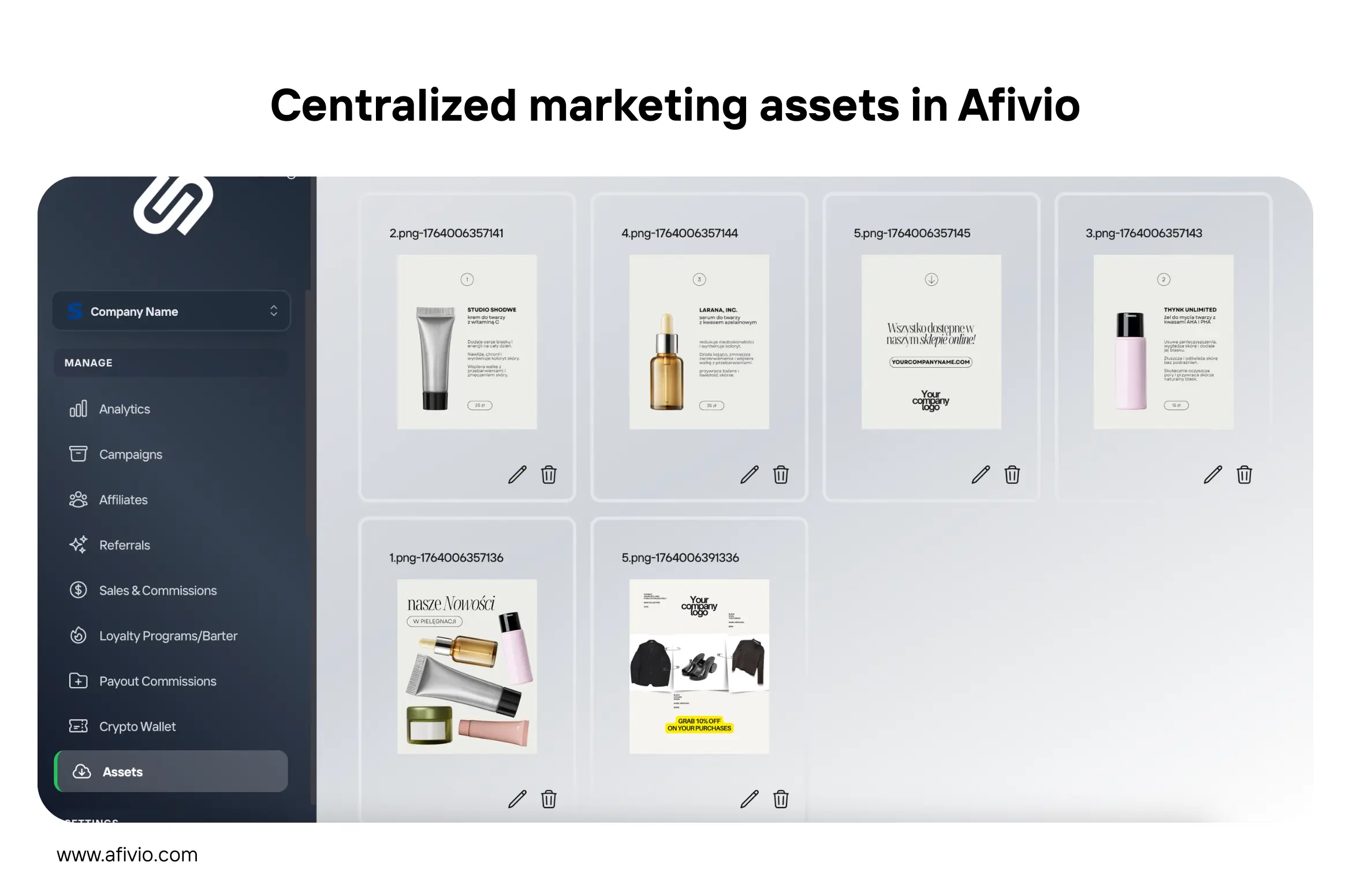
Give referrers pre-written messages or templates they can use and optionally customize. For example, prepare marketing materials in advance—such as photos or videos featuring your logo and products—that partners can easily share on their social media channels.
In Afivio, you can upload an entire library of these promotional assets, allowing your partners to access and use them instantly from their personal accounts.
Ensure the referral link or code is unique and automatically tracked. Users shouldn’t have to worry about whether their friend used the referral correctly—your system should handle attribution seamlessly. If a friend clicks the link and signs up, the referrer should be credited automatically, and the friend’s incentive (such as a coupon) should be applied without hassle.
Mobile-friendly design is essential: a large share of referrals are shared on mobile devices, so make sure the entire flow—from sending an invite to redeeming the reward—is smooth on a smartphone. Use simple mobile forms and one-tap copy or share buttons.
Keep the rules simple and transparent. If there are any eligibility criteria (for example, “new customers only”) or exclusions, communicate them clearly. Avoid complex steps like lengthy forms or multiple confirmations. The referral redemption for the friend should be just as painless—ideally, clicking the link automatically applies the discount or bonus in their cart.
5. Ask for Referrals at the Right Moment
Timing matters. The best time to request a referral is immediately after a customer has a positive experience with your business. You want to catch them at a moment when their satisfaction and enthusiasm for your product is at a peak—this is when they’ll be most willing to recommend you to others.
In e-commerce, the most effective moments to ask for referrals include:
- Right after delivery: when a customer receives their order and is happy with it. For example, follow up with: “Thank you—glad you’re enjoying your purchase! Share with a friend and you both get X.”
- After positive feedback or a review: a 5-star rating signals high satisfaction. This is a perfect trigger to say: “Thanks for the great review! Invite a friend to try us and you’ll both get a reward.”
- After a repeat purchase or milestone: second or third purchases indicate loyalty and strong brand affinity—ideal conditions for referrals.
- Following a positive customer support interaction: if an issue is resolved and the customer expresses gratitude, they may be open to recommending your brand.
What you should avoid is asking too early or at the wrong moment. If a customer has just signed up or hasn’t yet experienced real value, a referral request can feel premature or even desperate. Focus first on delivering an outstanding experience—earn trust and enthusiasm, then leverage it through referrals.
6. Personalize and Brand Your Referral Messaging
How you present your referral program matters just as much as the reward itself. Keep every touchpoint on-brand, personal, and easy to understand to build trust and increase engagement.
Personalize outreach: use the customer’s name and tailor email or SMS templates to your brand voice with Afivio instead of sending generic, one-size-fits-all messages.
Let referrers sound human: provide ready-made share messages they can easily edit, so invitations feel like genuine recommendations from a friend rather than automated promotions.
Keep design consistent: referral pages, widgets, emails, and banners should match your store’s colors, logo, and tone. Consistent branding increases credibility and trust.
Make the value obvious: clearly state what each side gets in one simple line—such as “Give $15, Get $15”—paired with a clear call to action.
Segment when it helps: use different wording or incentives for VIP customers versus first-time buyers to increase relevance and sharing.
Support with simple assets: provide a clear landing page or FAQ and downloadable creatives that customers can easily use when sharing.
Treat referral messaging like a mini-campaign—personal, branded, and crystal clear about the benefits for both the referrer and their friends.
7. Emphasize Social Motivation, Not Just Monetary Incentives
Money matters, but many customers refer brands because they want to help friends and share something genuinely valuable. Your referral program should highlight this emotional motivation, not just the financial reward.
Frame referrals as a favor rather than a transaction. Messaging like “Give your friends $20 off” feels more natural and generous than “Earn $20,” which can sound overly promotional. Community-driven language such as “share the love” or “help a friend save” further reinforces this effect.
Non-cash motivations can also be powerful—supporting a great product, contributing to a cause, or simply recommending something worth trying. Above all, ensure the referred friend has a great experience, as this builds trust and encourages repeat referrals.
Key idea: combine clear rewards with “help your friend” messaging to drive more authentic and consistent referrals.
8. Automate Tracking and Provide Transparency
To scale a referral program and build trust, automation and clear tracking are essential. Manual tracking often leads to errors, delays, and frustrated users. Instead, use a dedicated referral platform like Afivio to manage the entire flow automatically—from link sharing to reward delivery.
A strong referral system should:
- Generate unique referral links or codes
- Track clicks, sign-ups, and purchases in real time
- Automatically credit rewards when conditions are met
Transparency is key. Referrers should have access to a personal dashboard where they can clearly see referral statuses (invited, completed, rewarded) and their earned bonuses. This visibility increases confidence and significantly reduces support inquiries.
Automating fast reward delivery is equally important. Delays in payouts reduce motivation, while instant or timely rewards encourage continued sharing and long-term engagement.
Finally, use built-in analytics and fraud prevention tools to monitor performance, detect abuse, and protect the integrity of your referral program.
Bottom line: automation saves time, builds trust, and creates a smooth experience for both you and your referrers—turning your referral program into a scalable, results-driven growth channel.
9. Promote the Program and Communicate Regularly
A referral program won’t grow on its own. To succeed, it must be visible and promoted consistently. Many brands fail by launching a program and then going silent—lack of awareness is one of the biggest barriers to participation.
Make the program easy to find:
- Add links or banners on your website (navigation, account dashboard, order confirmation pages)
- Create a simple, clear landing page that explains how the program works
Use email as your core communication channel. Announce the program at launch and include gentle reminders in newsletters, post-purchase emails, and delivery confirmations—these touchpoints typically have high open rates. Keep messages short and focused on value.
When relevant, support email with push notifications, SMS, or in-app messages, especially after positive moments such as a successful purchase or a reward earned. These should be occasional nudges, not constant prompts.
Reinforce the program on-site with subtle UI elements like widgets, icons, or banners, and use special campaigns sparingly—for example, limited-time referral bonuses to create urgency.
Finally, segment your communication. Encourage first-time referrers, re-engage inactive users, and tailor messages based on customer behavior to stay relevant and effective.
Bottom line: promote consistently but tactfully. When customers regularly see clear, value-driven reminders, participation grows—without feeling like spam.
10. Continuously Test and Optimize the Program
Your first referral program won’t be perfect—and that’s expected. The strongest programs are continuously tested and improved over time. Treat your referral program as a living system, not a one-time launch.
Start by tracking key metrics such as referral participation rate, conversion rate of referred friends, and cost per referral. Look for drop-off points in the funnel that signal friction, unclear messaging, or weak incentives.
Regularly run A/B tests on the most important elements of your program:
- Call-to-action copy and design
- Reward type and value
- Referral conditions and friction points
- Messaging (reward-focused vs. “help a friend” framing)
- Timing and placement of referral prompts
- Promotion channels (email, in-app, social)
Change one variable at a time and allow enough data to draw meaningful conclusions. In addition, pay close attention to customer feedback—support questions or complaints often highlight unclear rules or UX issues that are worth fixing.
Bottom line: small, data-driven improvements compound over time. By consistently testing and optimizing, you can turn a good referral program into a high-ROI, scalable growth channel for your e-commerce business.
Conclusion
A well-designed referral program turns satisfied customers into trusted advocates and becomes one of the most cost-effective growth channels in e-commerce.
Afivio helps brands automate referral programs end-to-end—from setup to analytics—without complex development.
Also read:
- How to Set Up a Referral Program for E-commerce Business
- Why Brands Should Build Their Own Partnership Ecosystem
- How to Build Your First Referral Program
- Partnership Marketing in 2026: Afivio’s All-in-one platform for Referral, Affiliate & Influencer programs
- How to Reduce Customer Acquisition Cost (CAC) with a Referral Program